
On one side of the road, horses dash for trophies; on the other, chocolate collects medals. Not far from Prague’s Chuchle racecourse, Michaela Dohnálková and her four colleagues are celebrating ten years of successful business—and international recognition for their Míšina čokoláda is increasing at a racing pace.
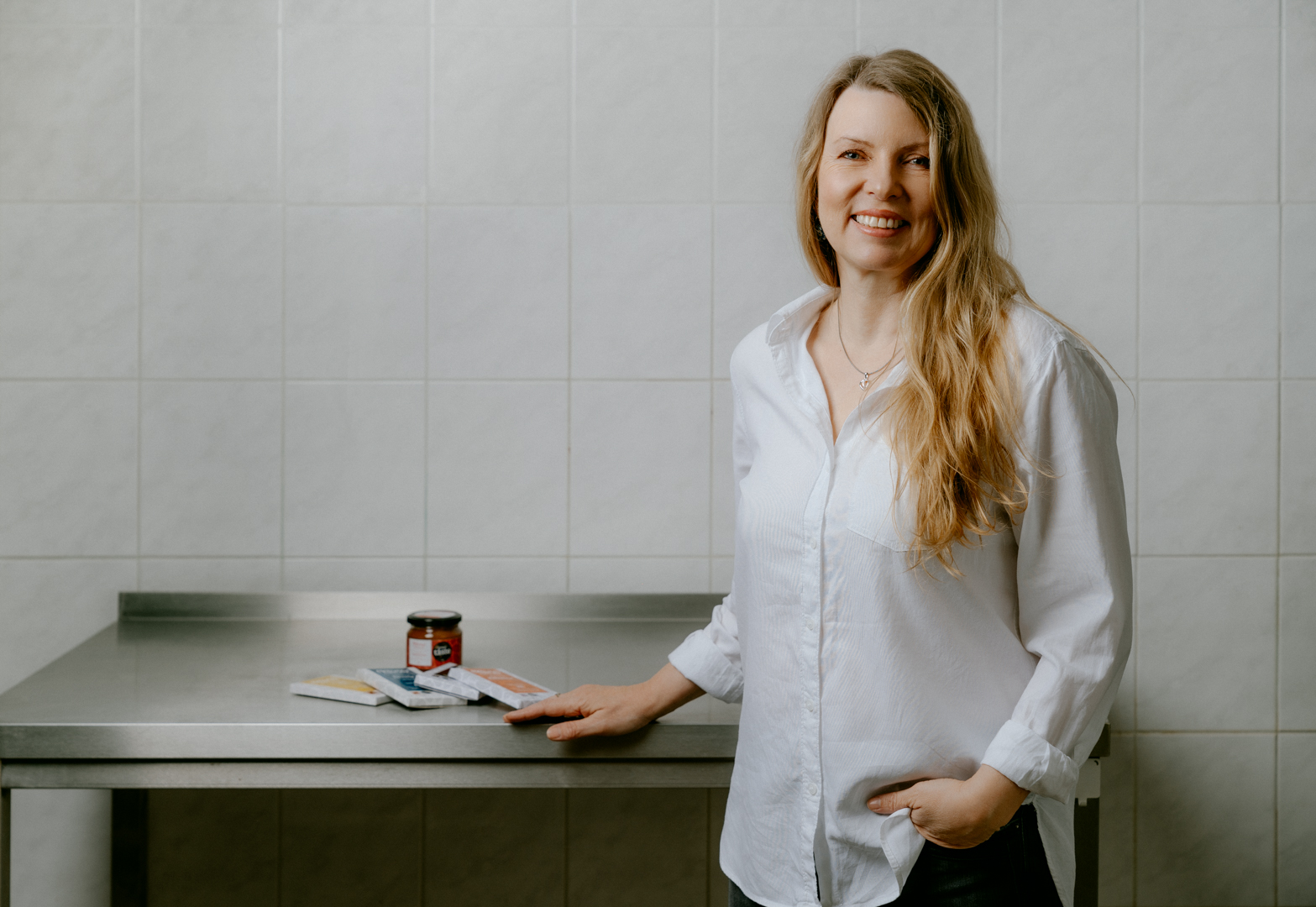
They are small but persistent. Chocolate from an inconspicuous Prague workshop, where five women work, is being praised by juries of prestigious world competitions. The founder of Míša's Chocolate approaches her success and more than sixty awards with humility. "I can only guess what is behind it. I am a lifelong chocoholic, and I went into business after spending a long time fine-tuning recipes and processes," says Michaela Dohnálková.
Today, the chocolate factory processes around five tons of cocoa beans per year. It has more than a hundred products. Dohnálková compares the growth in interest in quality chocolate to the rising trend of specialty coffee.
"With chocolate, however, it is more complicated because many adults have it in their heads as a sweet confection they buy for a few crowns. Getting used to having a small square with your coffee and truly enjoying it—even though chocolate can be healthy—is a long-term process," Dohnálková believes.
According to her, good chocolate is a combination of various factors: specialty cocoa beans and other ingredients, roasting time and temperature, and grinding time. Why her products regularly appeal to juries at the world's most prestigious competitions, she says, cannot be stated exactly.
"It might also be because my grandfather was a confectioner and I ate cakes and desserts from a young age, so my taste buds are somehow tuned. But I can't say that we do everything better than other chocolate factories; that would seem unfair to me. The essential thing is that we make no compromises when selecting ingredients and producing chocolate," Dohnálková thinks.
The War Was Worse Than Covid
However, even when something is done well, it is no guarantee of success. After founding the company in 2015, former teacher Michaela Dohnálková fully dedicated herself to recipe development, but focused less on marketing, online sales, or wholesale partnerships.
In 2019, the company surpassed a million-turnover for the first time, but then the pandemic arrived, and Míša's Chocolate didn't have an e-shop yet. Dohnálková had to finish it in a very short time, and in addition, the company began to focus on wholesale and active customer outreach.
"With that came a big increase. Between 2020 and 2021, it was more than one hundred percent," mentions the entrepreneur.
It only helped to start focusing on marketing, reaching out to the media, and participating in various events and tastings. By 2023, the chocolate factory's sales returned to normal and subsequently climbed fifty percent higher than before the war.
Míša's Chocolate continued its growth by expanding abroad and began exporting to Germany, England, and as far away as Australia. For now, most products are sold to business partners, but in the future, it plans to expand sales in other countries via its e-shop as well.
To this day, however, Míša's Chocolate is most interested in the domestic market, which is paying off. "We have an annual increase in sales, which is good because another problem has appeared in the form of high prices for cocoa butter and beans," notes the company founder.
Rising prices are affecting producers worldwide, who consequently must increase the price of chocolate and products made from it. Prices for cocoa butter are rising even faster than cocoa bean prices.
"A consequence that is not clear at first glance is that white chocolate has become more expensive to produce than dark. Quality white chocolate is made from cocoa butter, which is significantly more expensive today than cocoa beans," the entrepreneur points out.
The place where the award-winning chocolate is created is, despite the increase in production volume, still the small chocolate factory in Prague since 2020. In bean-to-bar production, you need a space that fits not only the machines for making chocolate but also a warehouse for bags of cocoa beans and enough space for unloading them.
Furthermore, the machines, which run for more than three days straight for one batch of chocolate, are noisy. "There are beautiful non-residential spaces on the market, but when people live above you, it is unpleasant for them. Surprisingly, the smell bothers some people too," Michaela says.
In this regard, according to her, finding a space for production in a large city like Prague is more complicated than, for example, in old textile factory buildings in eastern Bohemia. Especially when the chocolate factory is also interested in connecting the production facility with a showroom or a brick-and-mortar store.
Michaela would like to invest in this in the future. She is now thinking about a shop that would be separate from production and located in the center of Prague so that customers wouldn't have a long journey to it.
Annual Awards
Many people looking at her modest workshop on the outskirts of Prague would not guess that such a company successfully represents the Czech Republic in the chocolate world.
"Now our white chocolate with raspberries has won. It received two gold medals in the regional EMEA round of the prestigious international competition, International Chocolate Awards. And besides that, it was announced as the overall winner in the Flavoured bars category. That is, the best flavored chocolate across all categories—dark, milk, and white. A Czech chocolate has never won this before," the entrepreneur boasts.
But it's not the chocolate factory's only success. It recorded another at the Great Taste gastro-competition in England, where fourteen thousand products from all over the world compete every year. Míša's Chocolate sent six products this year and all six received awards. Three stars are given to 1.5 percent of them, two stars to ten percent, and one to a quarter of the products.
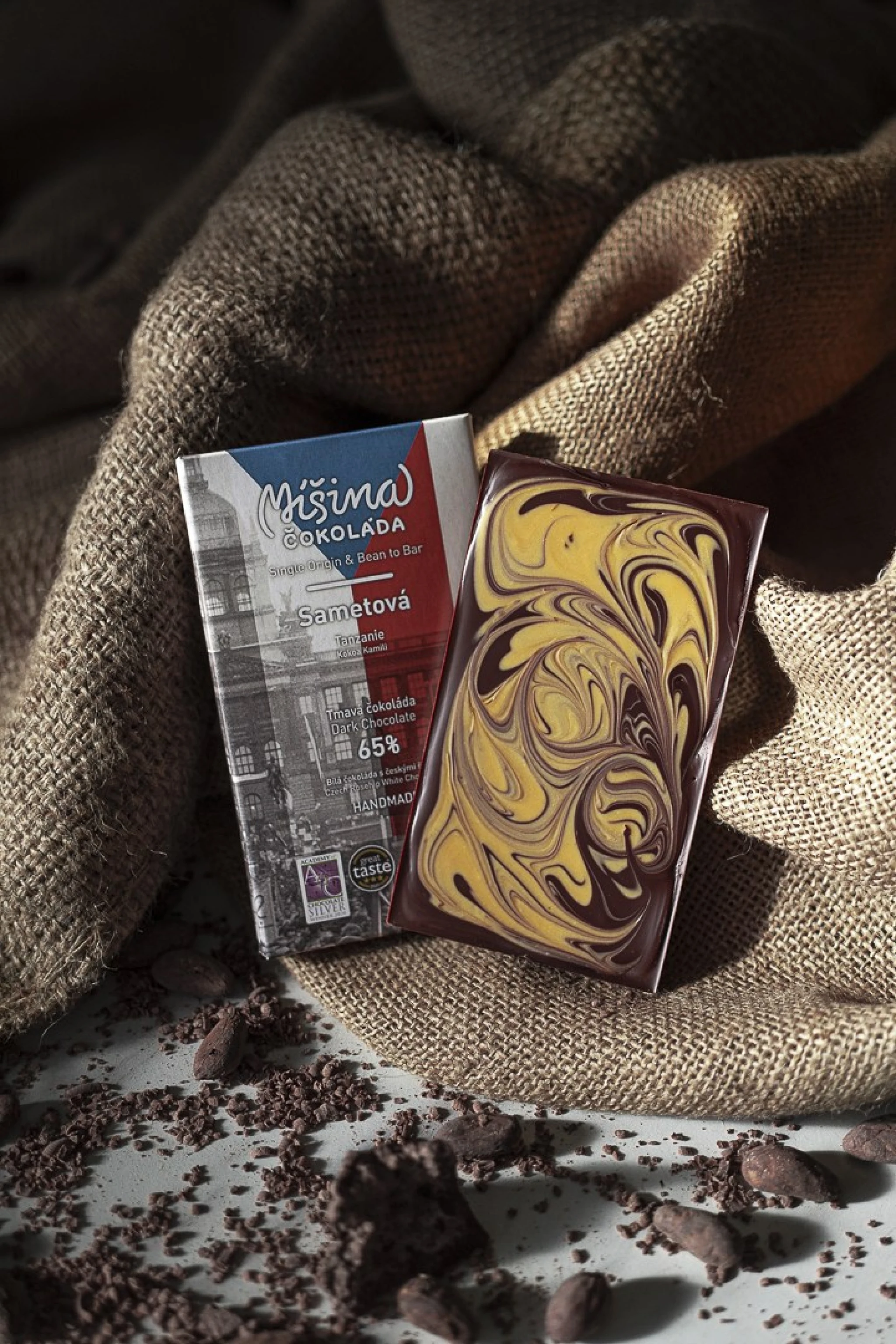

"For us, however, it is mainly important that we win awards every year. It shows that even though we produce more, we maintain our quality," mentions the chocolate maker, adding that the feedback participants receive from the judges, regardless of success in the competition, is also important.
In the Czech Republic, however, customers are not yet so oriented toward these awards, although some supposedly bet on her brand during selection anyway because it has many medals. "But of course, the taste remains fundamental," she adds.
In addition to sixty awards, it is also interesting that the Prague chocolate factory's treats are made by a team of women. In addition to five permanent employees, they also hire temporary staff during the busier season from October to January.
"It wasn't an intention, but since I founded Míša's Chocolate myself, it seemed nice to me to have a female collective here. And now I see that it works beautifully," the entrepreneur explains.
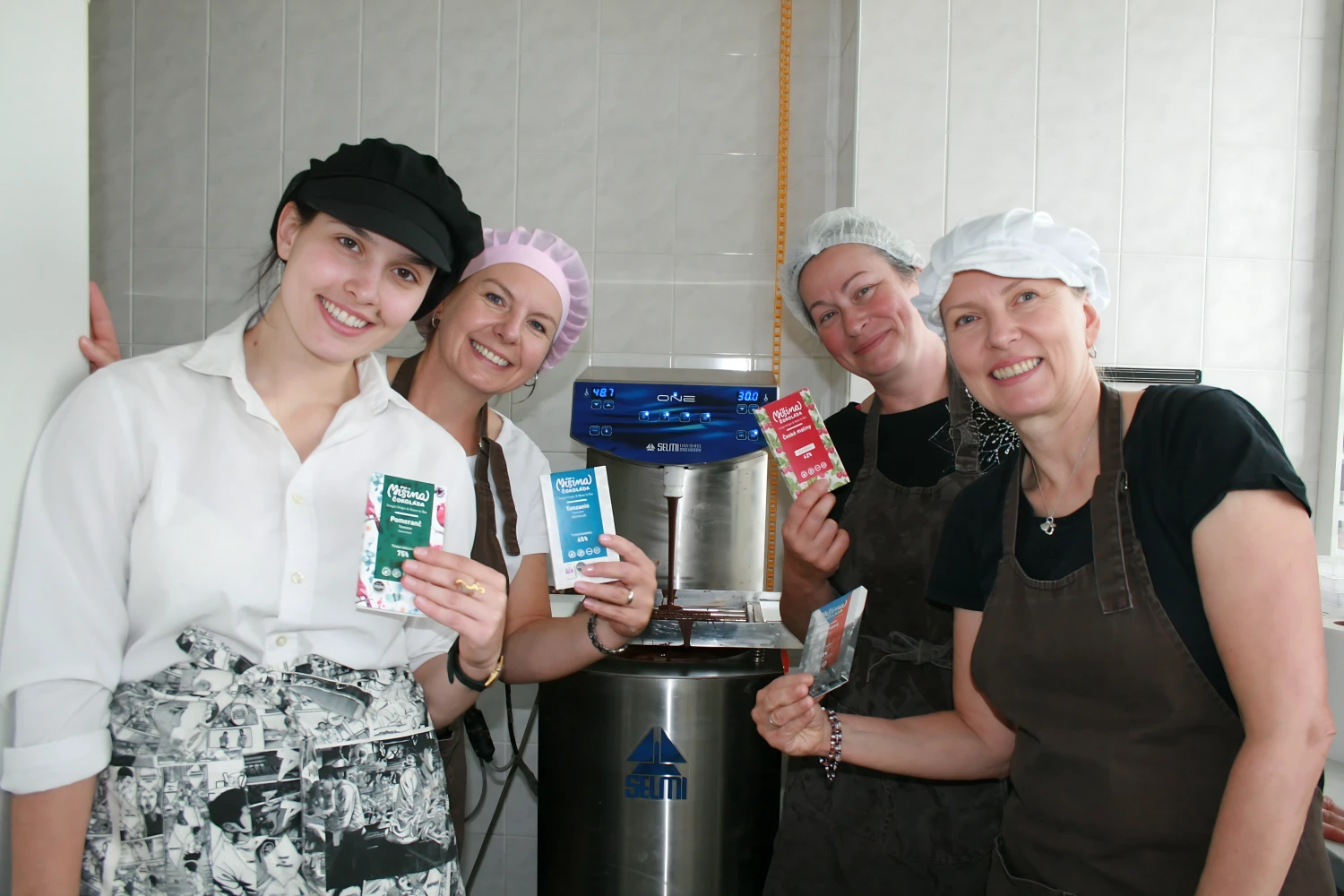
The only disadvantage appears when seventy-kilogram bags of beans are delivered to the chocolate factory. In such cases, they have to arrange with friends or employees of the neighboring auto repair shop to help out.
Watch Out for Bean Origin and "Handmade"
Many chocolate lovers do not know how cocoa beans reach small production facilities. "They often write that they have them directly from farmers, but a lot can be hidden behind that. For us, it works such that the farmers send the beans by container to Holland, and we take them by the bag from there," Michaela explains.
To be able to order a container directly, a chocolate factory would have to fill it and buy, for example, ten tons. "I know people who run cooperatives, and I know where the beans are from and what it looks like on the farm, but they don't send them directly to us in Prague. Almost no one does it that way in the Czech Republic," Michaela adds, showing a postcard on which African farmers from one such cooperative are waving to her.
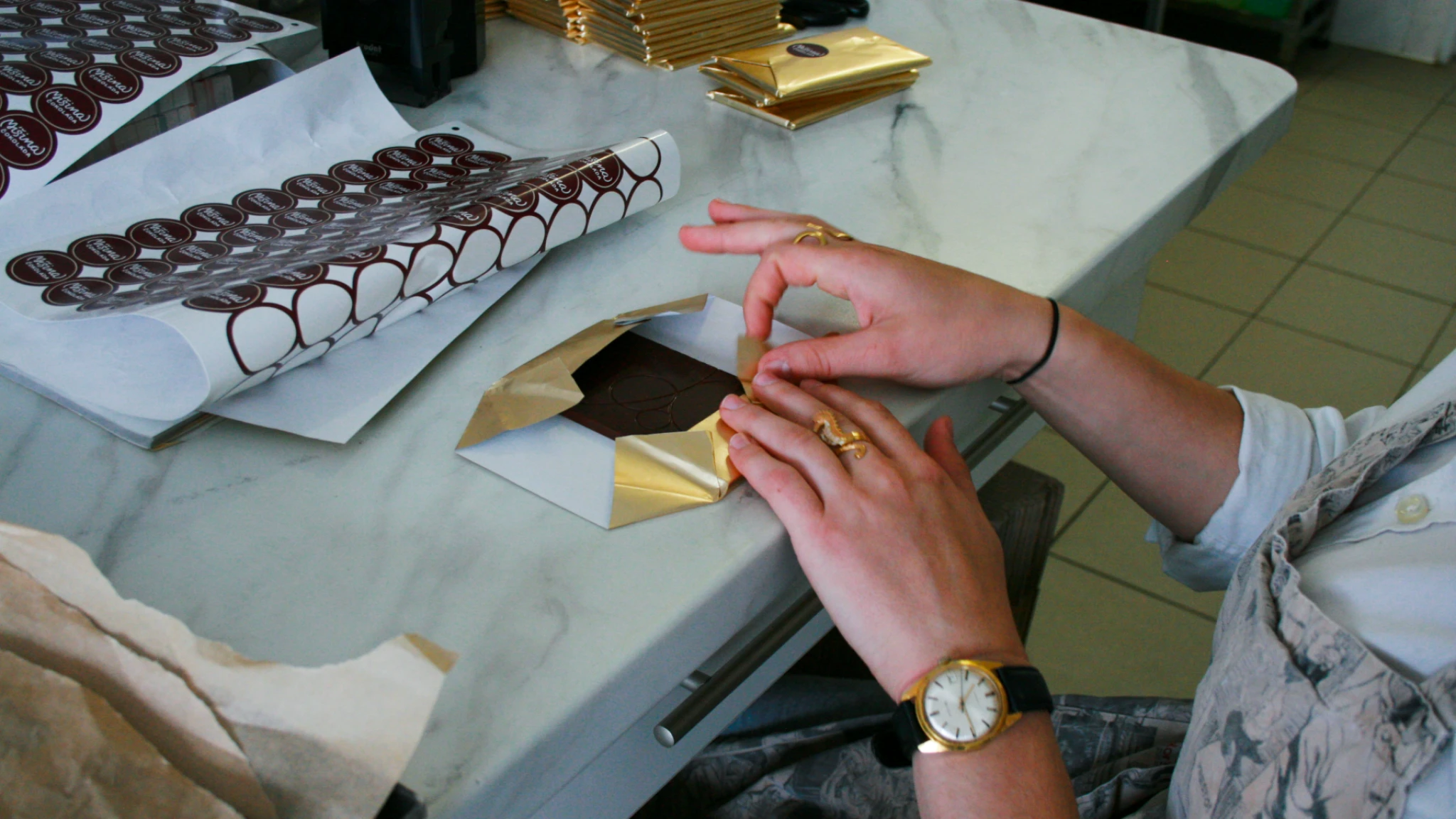
In her bean-to-bar production, the chocolate goes through the entire process from cocoa beans to the hand-wrapping of finished bars.
They also sell grated chocolate to cafes that make hot chocolate from it. "Now a collaboration with an ice cream maker is also taking shape. The taste is significantly better compared to ordinary chocolate, but it must be reflected in the price and communicated to the customer why it is more expensive," says Michaela.
Today, she sells the bars on the e-shop as well as in delis, gift shops, or cafes that choose them for supplementary sales. Míša's Chocolate can also be found in some health food stores, totaling around two hundred business partners.
And how should an ideal bar look, according to the award-winning chocolate factory? It should appeal to all senses, says Dohnálková. The eyes are interested in whether the bar glitters, the ears wait for the snap, it should be aromatic for the nose, and most importantly, of course, is the taste, which should not be flat but should have different flavor notes at the beginning, middle, and end. It should also have a pleasant and long aftertaste. The fifth sense is touch—how you feel the texture on the tongue, which should be smooth, not sandy or dry.